
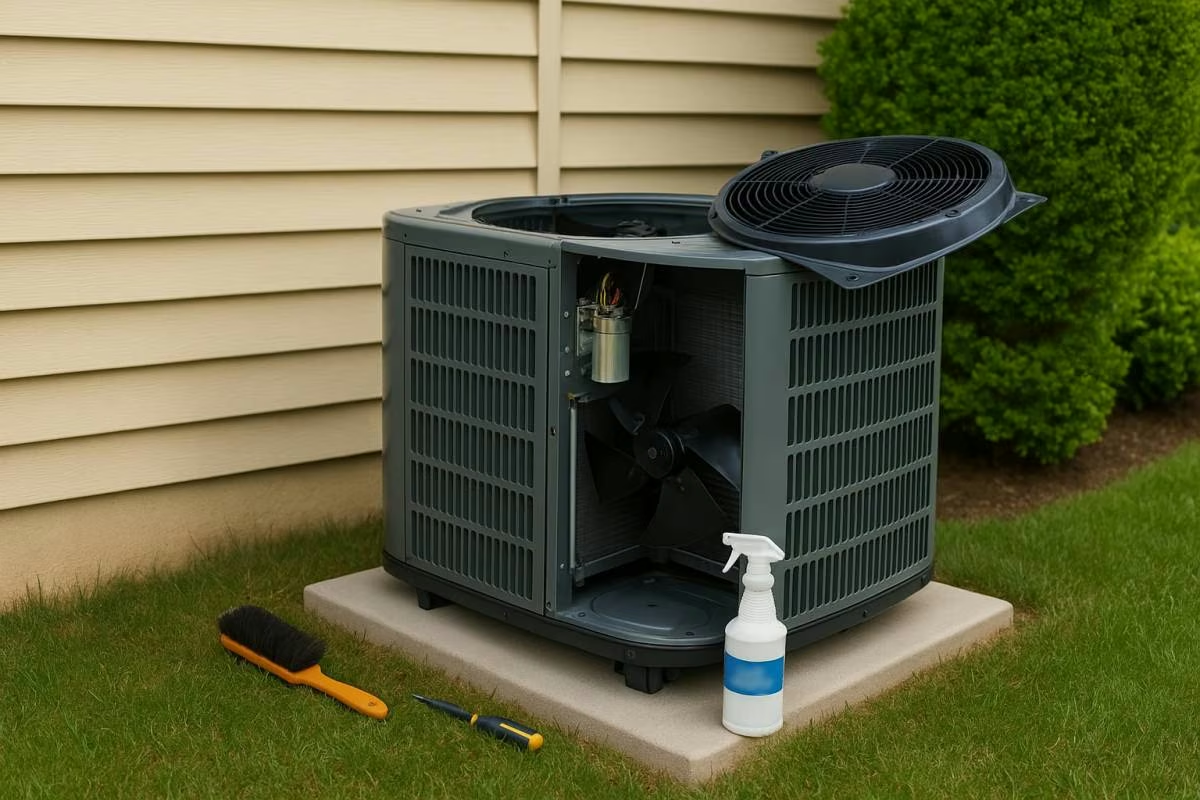
Sacramento summers could be hard on your AC, raising bills and impacting comfort. With high utility rates, even small inefficiencies add up. Understanding when to repair or replace helps reduce costs, comply with state standards, and extend your system’s life.
AC Repair vs Replacement in Sacramento: How to Decide
Sacramento’s climate puts AC systems to the test. Long, hot summers keep your system running for hours at full capacity. While coastal areas deal with salt air, Sacramento homeowners face intense dry heat that accelerates system fatigue.
Older systems don’t just struggle to keep up; they waste energy. According to Energy Star, High-efficiency replacement can reduce cooling costs by 20-40%, significantly impacting summer expenses. (Source: Energy Star)
Beyond comfort, poor cooling affects indoor air quality and your home’s resale value. Buyers expect efficient, modern systems. If your AC struggles to keep up, it may be time to consider options beyond repairs and focus on long-term value.
Warning Signs of AC Repair or Replacement
Sometimes your AC clearly shows something’s wrong. Here’s what to watch for:
- Rising energy bills despite normal usage: Rising bills indicate your system is losing efficiency, often due to worn components. A repair may help, but older systems often need to be replaced.
- Frequent breakdowns or service calls: More than one repair each season means higher costs and often points to a failing system.
- Inconsistent room temperatures or poor airflow: Hot and cold spots mean airflow issues, duct problems, or a failing compressor.
- AC runs constantly or Short Cycles: Constant running means your system can’t keep up. Short cycling stresses parts and shortens system life.
- Strange noises: grinding, squealing, rattling sounds often indicate mechanical wear or loose components.
- Humidity problems indoors: If your AC doesn’t control humidity, it has a problem - even in dry Sacramento.
- Unpleasant smells: Musty smells can mean mold in the system. Burning smells likely signal electrical problems.
- Refrigerant Leak: A refrigerant leak, especially in R-22 systems, makes repairs costly and impractical because R-22 is being phased out.
- The System fails during peak Heat: If your AC fails on hot days, it’s near the end of its life.
Without regular maintenance, systems lose about 5% efficiency each year. An annual tune-up prevents many issues from getting worse.
When Replacement is More Beneficial
At some point, repairing your AC stops making financial sense, so it’s important to determine when repairs no longer outweigh the value of your current system and replacement becomes the better option.
Start with the numbers. In California, average AC repair costs range from $350 to $900. That might seem manageable, but repeated repairs add up quickly.
Use the “$5,000 Rule”: multiply the system’s age by the repair cost. If that number is over $5,000, replacement is better.
You should also consider:
- Warranty status: If your system is out of warranty, you’ll pay full cost for parts and labor.
- Frequency of repairs: Each repair makes your system less reliable. Eventually, replacement becomes unavoidable.
- Hidden costs: Emergency calls in peak heat, higher bills, and downtime all add hidden costs.
And if your system uses R-22 refrigerant, replacement becomes even more practical. Repairs involving R-22 are increasingly expensive due to phase-out regulations.
If your AC is old, inefficient, and unreliable, replacement saves money.
American Energy Home Pros’ High-Tech Upgrade for Total Climate Control
Homeowners often call us for a second opinion after unclear or assertive recommendations. For example, Kelsey Woodson reached out during a stressful AC issue, unsure if the advice she received was trustworthy.
Our technician took the time to fully diagnose the problem and explain the options clearly. As Kelsey shared, “Greg was very informative and helpful… he was honest about our options and empathetic with the stress we were feeling, and the experience felt different from that of another company.” You can read her full review here.
That transparency provided Kelsey not just with a working AC but also peace of mind, knowing her system runs efficiently and safely.
Benefits of Professional Air Conditioning Service in Sacramento
Working with a professional HVAC team gives you more than a quick fix:
- Accurate, lasting repairs: No guesswork. Professionals diagnose and fix problems right the first time.
- Lower energy costs: Professional tuning restores efficiency and lowers monthly bills.
- Longer system lifespan: Proper care helps your system last longer.
- Improved indoor air quality: Clean filters, coils, and ducts give you healthier air at home.
- Warranty protection: Most manufacturers require professional maintenance to keep warranties valid.
- Code compliance and safety: California regulations are strict. Professional service ensures your system is compliant.
- Faster service when you need it: With trained technicians, you get quick emergency service.
If you’re dealing with rising bills, poor cooling, or frequent repairs, now is the time to act.
Efficient Cooling, Lower Bills: Get Smart AC Solutions in Sacramento
Choosing the right HVAC partner matters. American Energy Home Pros offers 45+ years of experience, licensed California professionals (License #1083187), and a commitment to quality. We handle permits, provide clear estimates, and back our work with warranties.
Explore our comprehensive AC services. We serve Sacramento and nearby areas with same-day service and upfront pricing. Book your consultation today and enjoy a cooler, more efficient home.
FAQs
How to Tell if my AC system in Sacramento needs repair or full replacement?
Consider age, repair frequency, and performance. Newer systems with minor issues can be repaired. Older units with frequent problems should be replaced.
What are the most common AC problems during Sacramento summers?
Overheating, refrigerant issues, airflow problems, and systems struggling with heat are common.
At what age should an AC be replaced instead of repaired?
Typically, around 10-12 years in California, depending on use and maintenance.
How do rising energy bills signal AC problems?
Rising bills often mean reduced efficiency, worn parts, or system strain.
Are there California code requirements affecting AC decisions?
Yes. New installations must meet efficiency and permitting standards.
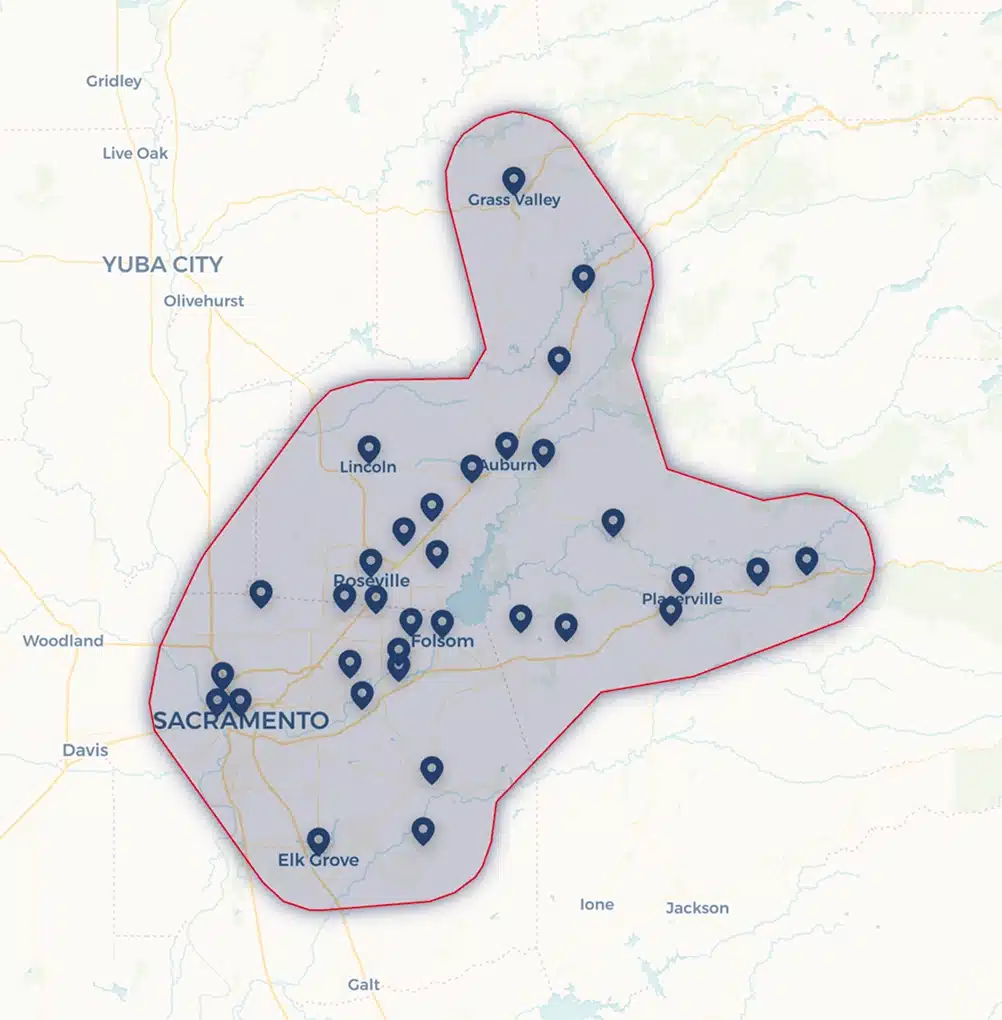
HVAC & plumbing across greater Sacramento.
From Loomis to El Dorado Hills, our team services 35+ communities for both HVAC and plumbing. If you're in the area, we can be at your door - usually same day.
Communities we serve (HVAC + plumbing):
 1,100+ reviews
Hear what our customers are saying



Carter from American Energy exceeded my expectations for a standard inspection. He left our HVAC system looking bright and shiny! He called before and was able to come by early. Really appreciated that!


Greg Rangel was on time, gave me a courtesy call before he arrived, and once he arrived, he called to find out the issues with the AC and got to work. Greg provided me with information about the AC unit after he found out what was happening, and he walked me through the process and the cost! He also changed the filter! I am now a member due to his outstanding customer service. Thank you, Greg, for your professionalism.
This company responded immediately to address an air conditioning problem for my elderly Mother during 100 degree heat. They responded in just a couple of hours. Greg Rangel was the technician and fixed the problem. He did explain the unit was older and would soon need replacement. He thoroughly explained this to me and offered a senior discount for my Mother and a lower priced unit. Job well done and thank you.
Technician conducted a thorough inspection of the HVAC system while maintaining a friendly and positive demeanor.
I recently had an air duct cleaning and I am very happy with the results. The team was so knowledgeable and personable. I would use them again for this or other HVAC needs.
Quick scheduling and professional service. I will use them again and again. Thank you!!
Great A/C service by Garrett. He was very thorough and knowledgeable on his service. Would highly recommend.
Truly professionals. Garrett showed up at scheduled time, answered all my questions and did a thorough inspection of my unit. Never felt pressured or like I was trying to be sold on anything. He explained everything along the way. An issue was found on some wiring outside, I was shown the issue and given the option to have it fixed. He showed me the completed work and the material used. I would highly recommend this locally owned and operated company.
Greg arrived late Saturday evening and worked out the problem. He explained the problem and eventually determined it began with the original set up of the thermostat, which was wrong for a heat pump. The problem was fixed, and great credit to Greg for being enthusiastic, professional and staying until it was done.
We have had a great experience with everyone from American Energy. Today we had David, and he is a very nice young man, respectful, knowledgeable and very professional. I would recommend this company to all my friends and family.

