

HVAC · PLUMBING · SINCE 1981
Leak Detection in Sacramento, CA

Leak detection is worth paying for because the alternative is exploratory demolition. Opening a slab, a driveway, or a finished wall to look for a leak costs more than the repair itself, which is why locating precisely first is the economical path. American Energy Home Pros locates hidden leaks across the greater Sacramento area, and our licensed technicians (License #1083187) find the leak before anything is opened. We are open 24 hours a day.
Why Leaks Hide in Sacramento Homes
Construction type is the reason. Most homes built here from the 1960s onward across Elk Grove, Natomas, Antelope, Citrus Heights, and Rancho Cordova sit on a concrete slab with supply lines run in or beneath it. A pinhole in a hot line under a slab can run for months, wicking into flooring and subfloor and showing up as a warm spot or a musty smell long before anyone sees water. In older neighborhoods with galvanized supply, the same thing happens inside walls.
Expansive valley clay contributes by moving seasonally and stressing buried lines and joints. On foothill and rural properties the exposure is different but larger: long service runs from a meter or well to the house mean far more linear feet of pipe where a leak can hide under a driveway or a field.
Our Detection Equipment
- Acoustic ground microphones and listening discs. Pressurized water escaping a pipe makes a characteristic sound. Amplified listening across a grid narrows the source to a small area, which is the core technique for slab leaks.
- Pressure isolation testing. Isolating hot from cold and section from section, then watching pressure decay, tells us which run is losing water before we listen for exactly where.
- Line and depth tracing. Locating the actual routing and depth of a buried line determines whether repair or reroute is the cheaper answer.
- Thermal imaging. A hot water leak under a slab or behind a wall creates a temperature signature that thermal imaging reveals without opening anything.
- Meter observation. The simplest and most decisive test. With every fixture shut, a moving meter proves a leak exists and, with the house valve closed, tells us whether it is before or after the house.
- Sewer camera, for drain side leaks. A leak on the drain side rather than the supply side needs a camera, not a microphone, and we bring both.
Signs of a Hidden Leak
- The water meter moves with everything in the house shut off
- A water bill that jumps with no change in usage
- A warm or hot spot on a slab floor
- The sound of running water when nothing is on
- Musty odor along a wall base, or buckling and lifting flooring
- Water pressure that has dropped noticeably
- Persistently damp, soft, or unusually green ground in the yard
- Discoloration or staining on a ceiling or wall with no obvious source
What Happens After We Find It
Detection produces a location, a depth, and an identification of which line is leaking. From there we lay out the options that actually apply. A spot repair opens the smallest possible area at the located point. A reroute abandons the failed run and routes new pipe overhead through walls and attic, which on a slab leak is frequently cheaper than breaking and restoring concrete. A full repipe is the honest recommendation when the pipe material itself is failing throughout the house, because a spot repair on end of life galvanized just relocates the next leak. We price the options that apply and let you choose.

Meter moving with everything off?
That is a leak. We locate it before anyone opens a floor or a wall.
How We Confirm the Leak Is Resolved
After the repair we pressure test the repaired section, confirm the meter holds completely steady with all fixtures closed, verify static pressure at a hose bib is in the normal range and that the pressure regulator is working, and check flow at the fixtures furthest from the entry point. On slab work we document the location and the repair so there is a record of what is under the floor. A steady meter is the only proof that matters, and it is the last thing we check before leaving.
Why Guessing Costs More Than Detecting
The economics here are unusually clear. Detection is a fraction of the cost of opening concrete, tile, or finished walls in the wrong place, and a wrong guess costs you both the demolition and the restoration with nothing to show for it. There is also a water waste dimension: the EPA’s WaterSense program estimates household leaks waste enormous volumes annually, which matters in a state with recurring drought restrictions.
The cost of waiting is the reason we treat these as urgent. A slab leak wicks continuously into subfloor and drywall, and mold remediation plus flooring replacement routinely exceeds the plumbing bill several times over.
Why Choose American Energy Home Pros
- Established 1981, more than 40 years serving the greater Sacramento area
- California license #1083187, licensed, bonded, and insured
- 5.0 star rating across more than 1,100 Google reviews on our Sacramento, Folsom, and Loomis listings
- Open 24 hours a day for emergencies
- Upfront pricing presented before work begins
- Three locations covering Sacramento, Placer, El Dorado, and Nevada counties
- Financing available, including 0 percent options for qualified customers
- Locally owned, with the owner reachable directly
Schedule Leak Detection
Tell us what you are seeing and we will locate before anything gets opened. Once located we handle water line repair directly, and where the pipe material is at end of life we will discuss whole home repiping. If the symptoms point to the drain side instead, a sewer camera inspection is the right starting point.
Leak Detection FAQs
How do you find a leak without tearing anything up?
Pressure isolation narrows which line is leaking, then acoustic listening and thermal imaging pinpoint where. We open only at the located point.
How accurate is acoustic detection?
On a pressurized line under a slab, typically accurate enough to open a small, specific area rather than a room. Accuracy depends on flooring type, depth, and background noise, and we will tell you our confidence before you commit to opening anything.
What is the first thing I should check myself?
The meter. Shut every fixture and appliance that uses water and watch it. If it moves, you have a leak, and that single observation saves diagnostic time.
Do you detect leaks on the drain side?
Yes, with a camera rather than acoustic equipment. Drain lines are not pressurized so they do not make the same sound, which is why the tool has to change.
Can you find a leak under a driveway or a pool deck?
Yes. Acoustic detection and line tracing work through hardscape, and locating precisely is what keeps you from cutting more concrete than necessary.
Will my insurance cover a slab leak?
Policies vary. Many cover the resulting water damage but not the pipe repair itself. We document the failure and the location, which is what a claim needs.
How long does detection take?
Most residential leak detection is completed in one visit, often within a couple of hours. Long rural service runs can take longer.
Is a warm spot on the floor always a slab leak?
It is the most common cause when there is no radiant heating in the floor. We confirm with listening and imaging rather than assuming, because opening a slab on an assumption is the expensive mistake.
GET A REAL NUMBER, NOT A RANGE
Tell us what’s going on. We’ll call you back, a real local human, usually within the hour.
No obligation. No pressure. We never sell your information.
ON THIS PAGE
24/7 EMERGENCY
WE ANSWER DAY OR NIGHT
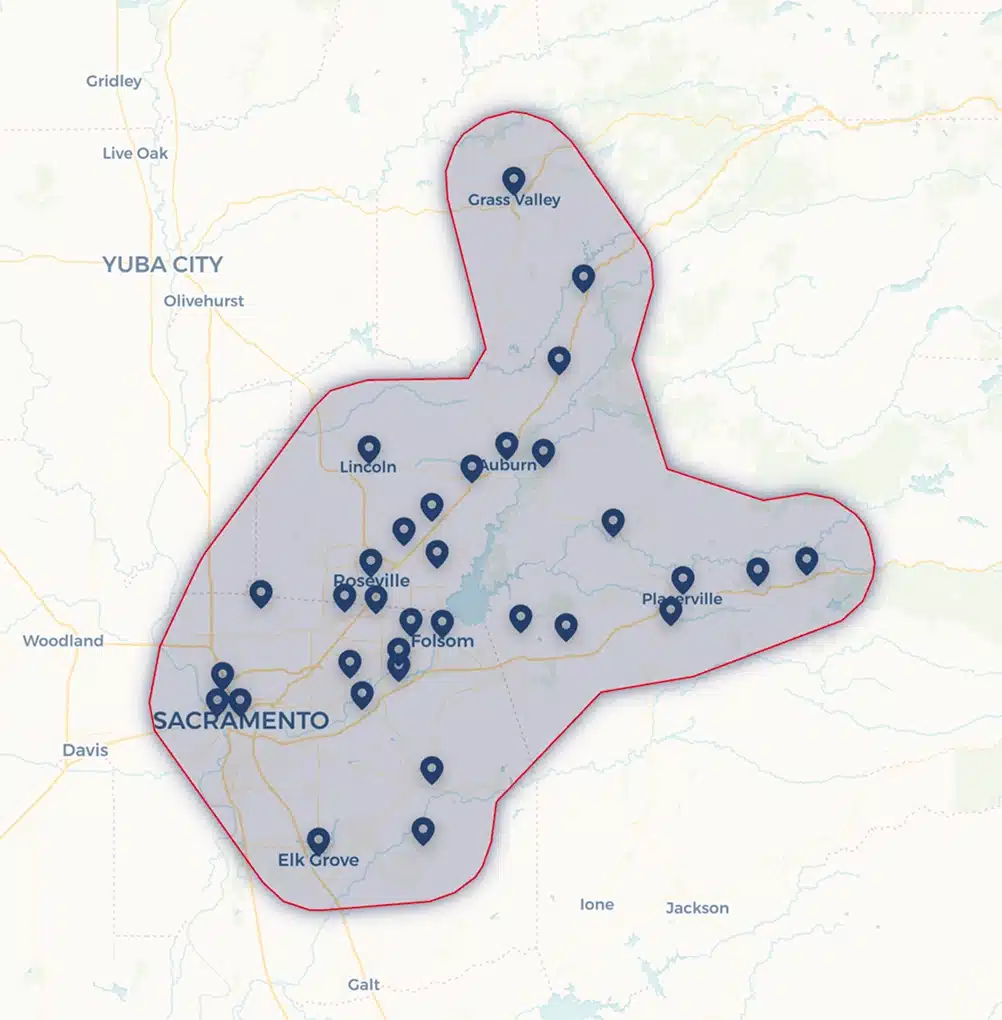
HVAC & plumbing across greater Sacramento.
From Loomis to El Dorado Hills, our team services 35+ communities for both HVAC and plumbing. If you’re in the area, we can be at your door - usually same day.
Communities we serve (HVAC + plumbing):
 1,100+ reviews
Hear what our customers are saying



Carter from American Energy exceeded my expectations for a standard inspection. He left our HVAC system looking bright and shiny! He called before and was able to come by early. Really appreciated that!


Greg Rangel was on time, gave me a courtesy call before he arrived, and once he arrived, he called to find out the issues with the AC and got to work. Greg provided me with information about the AC unit after he found out what was happening, and he walked me through the process and the cost! He also changed the filter! I am now a member due to his outstanding customer service. Thank you, Greg, for your professionalism.
This company responded immediately to address an air conditioning problem for my elderly Mother during 100 degree heat. They responded in just a couple of hours. Greg Rangel was the technician and fixed the problem. He did explain the unit was older and would soon need replacement. He thoroughly explained this to me and offered a senior discount for my Mother and a lower priced unit. Job well done and thank you.
Technician conducted a thorough inspection of the HVAC system while maintaining a friendly and positive demeanor.
I recently had an air duct cleaning and I am very happy with the results. The team was so knowledgeable and personable. I would use them again for this or other HVAC needs.
Quick scheduling and professional service. I will use them again and again. Thank you!!
Great A/C service by Garrett. He was very thorough and knowledgeable on his service. Would highly recommend.
Truly professionals. Garrett showed up at scheduled time, answered all my questions and did a thorough inspection of my unit. Never felt pressured or like I was trying to be sold on anything. He explained everything along the way. An issue was found on some wiring outside, I was shown the issue and given the option to have it fixed. He showed me the completed work and the material used. I would highly recommend this locally owned and operated company.
Greg arrived late Saturday evening and worked out the problem. He explained the problem and eventually determined it began with the original set up of the thermostat, which was wrong for a heat pump. The problem was fixed, and great credit to Greg for being enthusiastic, professional and staying until it was done.
We have had a great experience with everyone from American Energy. Today we had David, and he is a very nice young man, respectful, knowledgeable and very professional. I would recommend this company to all my friends and family.

